Learning Outcomes:
i. Define peroxisomes and glyoxysomes and explain their role as microbodies in cells.
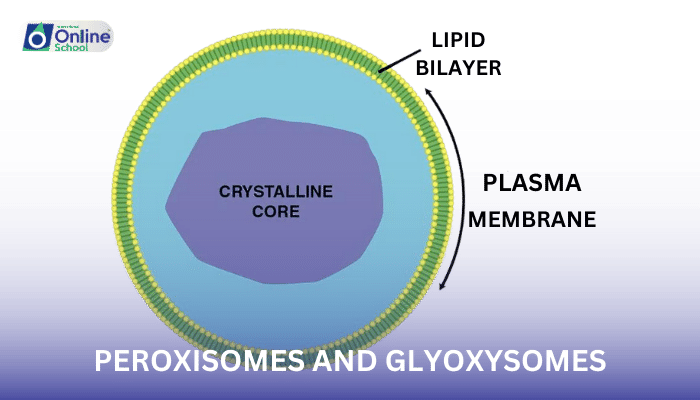
ii. Describe the structure of peroxisomes and glyoxysomes, highlighting their unique membrane and matrix components.
iii. Explain the diverse metabolic functions of peroxisomes in animal cells, including lipid metabolism, detoxification, and reactive oxygen species (ROS) scavenging.
iv. Discuss the specialized metabolic functions of glyoxysomes in plant cells, focusing on their role in fat breakdown and glyoxylate cycle reactions during seed germination.
v. Recognize the significance of peroxisomes and glyoxysomes in maintaining cellular homeostasis and plant development.
i. Peroxisomes: Versatile Metabolic Hubs in Animal Cells
Peroxisomes are small, membrane-bound organelles found in eukaryotic cells, particularly animal cells. They play a crucial role in various metabolic processes, including:
Lipid metabolism: Peroxisomes participate in the breakdown of fatty acids, particularly very-long-chain fatty acids (VLCFAs), and the production of fatty acid derivatives.
Detoxification: Peroxisomes contain enzymes that detoxify harmful substances, such as alcohol, hydrogen peroxide, and certain toxins.
Reactive oxygen species (ROS) scavenging: Peroxisomes harbor enzymes, such as catalase and superoxide dismutase, that protect cells from damage caused by reactive oxygen species.
Structure of Peroxisomes:
Membrane: Peroxisomes are enclosed by a single membrane, similar to other cellular organelles.
Matrix: The peroxisomal matrix contains enzymes and proteins involved in various metabolic pathways.
ii. Glyoxysomes: Fat Breakdown Specialists in Plant Cells
Glyoxysomes are specialized peroxisomes found in plant cells, particularly in germinating seeds. They play a critical role in fat breakdown and glyoxylate cycle reactions during seed germination:
Fat breakdown: Glyoxysomes contain enzymes that break down stored fats, such as triacylglycerols, into smaller molecules, providing energy and carbon sources for the growing seedling.
Glyoxylate cycle: Glyoxysomes host the enzymes of the glyoxylate cycle, a metabolic pathway that converts certain fatty acids into carbohydrates, providing an alternative source of energy for seedlings.
Structure of Glyoxysomes:
Membrane: Glyoxysomes, like peroxisomes, are enclosed by a single membrane.
Matrix: The glyoxysomal matrix contains enzymes involved in fat breakdown and glyoxylate cycle reactions.
Significance of Peroxisomes and Glyoxysomes:
Cellular homeostasis: Peroxisomes play a vital role in maintaining cellular homeostasis by detoxifying harmful substances and scavenging reactive oxygen species.
Plant development: Glyoxysomes are essential for providing energy and carbon sources during seed germination, facilitating the growth and development of new plant life.
Peroxisomes and glyoxysomes are versatile microbodies that perform diverse metabolic functions in animal and plant cells. Peroxisomes contribute to lipid metabolism, detoxification, and ROS scavenging, while glyoxysomes specialize in fat breakdown and glyoxylate cycle reactions during seed germination. Understanding the structure, functions, and significance of these organelles highlights their crucial role in maintaining cellular homeostasis and plant development.
